
Cast:
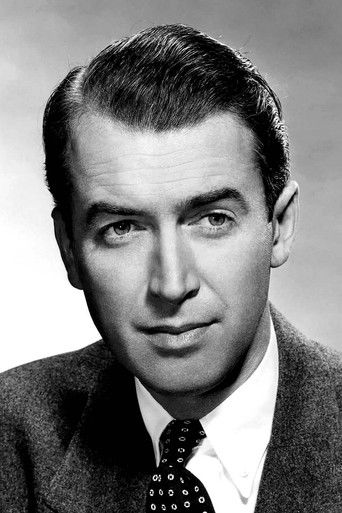 James StewartDet. John 'Scottie' Ferguson
 Kim NovakMadeleine Elster / Judy Barton
 Barbara Bel GeddesMarjorie 'Midge' Wood
 Tom HelmoreGavin Elster
 Henry JonesCoroner
 Raymond BaileyScottie's Doctor

Erotic Obsession and Tragic Sleight of Hand in Alfred Hitchcock’s Masterpiece
Alfred Hitchcock delivered his most hypnotic, personal, and devastating exploration of male desire with Vertigo, a film that continually tops international critics polls as one of the greatest movies ever made. Released in 1958 and starring James Stewart in a shockingly dark role, this San Francisco mystery deconstructs romantic illusion and psychological manipulation.
John Scottie Ferguson is a former San Francisco police detective forced into early retirement after a rooftop chase results in an officer plunging to his death, leaving Scottie with severe acrophobia and crippling vertigo. An old college acquaintance named Gavin Elster approaches Scottie with a sensitive domestic job: following Elster’s glamorous wife Madeleine, who enters catatonic trances and wanders the city as if possessed by the spirit of her tragic great-grandmother, Carlotta Valdes. Skeptical at first, Scottie tails Madeleine through florists, art galleries, and foggy cemeteries. When she plunges into the freezing bay near the Golden Gate Bridge, Scottie dives into the waves to pull her out, falling headlong into a desperate romantic obsession that leads to tragedy at a Spanish mission bell tower.
James Stewart’s Dark Descent and Kim Novak’s Dual Tragedy
James Stewart completely sheds his wholesome everyman persona, portraying Scottie as a wounded, controlling man whose grief evolves into an unsettling obsession with reshaping a woman into his idealized fantasy. Kim Novak gives a luminous, heart-wrenching double performance as both the ethereal, aristocratic Madeleine and the vulnerable, working-class Judy Barton. Barbara Bel Geddes provides warmth and grounded affection as Midge Wood, Scottie’s former fiancee who watches his mental collapse in quiet heartbreak.
The Revolutionary Dolly Zoom and Bernard Herrmann’s Swirling Strings
Hitchcock invented the legendary dolly zoom in-camera technique, simultaneously tracking backwards while zooming in to physically replicate the dizzying, nauseous sensation of vertigo on the stairwell. Robert Burks’s lush VistaVision cinematography saturates San Francisco in vivid emerald greens and ruby reds, giving the city a ghostly, dreamlike texture. Bernard Herrmann’s swirling orchestral score, inspired by Wagner’s Tristan und Isolde, circles like a whirlpool of passion and doom. Cinema buffs who appreciate the intricate narrative illusions of The Prestige and the haunting dread of Shutter Island will find Vertigo unmatched.
Vertigo is a profound, intoxicating masterpiece that lays bare how obsessing over an idealized ghost can destroy the living soul right in front of you.
Score: 9 / 10 Stars
Vertigo Ending Explained
⚠️ Major spoilers ahead! ⚠️
The revolutionary narrative twist of Vertigo reveals that Madeleine never jumped from the bell tower; Scottie was framed as an alibi in Gavin Elster’s premeditated murder of his real wife, and shopgirl Judy Barton played Madeleine all along.
Hitchcock famously reveals the entire conspiracy two-thirds into the film through a flashback letter written by Judy Barton. Gavin Elster knew that Scottie suffered from debilitating acrophobia that made it physically impossible for him to climb to the top of the Mission San Juan Bautista bell tower. Elster hired Judy, a working-class Kansas girl, to dye her hair platinum blonde and play the haunted Madeleine. When Scottie was paralyzed by dizziness on the wooden stairs, Elster hauled his real, already murdered wife onto the roof and tossed her corpse onto the tiles below, relying on Scottie’s eyewitness testimony at the coroner’s inquest to rule the death a suicide.
Devastated and guilt-ridden, Scottie wanders San Francisco and spots Judy Barton on the street. Driven by obsession, he forces Judy to dye her hair platinum, wear Madeleine’s grey suit, and recreate the dead woman down to the finest detail. Judy, genuinely in love with Scottie and longing to be cherished, complies with his demands.
The deception unravels when Judy asks Scottie to fasten a ruby pendant necklace around her neck. Scottie recognizes the heirloom as Carlotta Valdes’s necklace from the oil painting at the museum. Scottie drags Judy back to the San Juan Bautista bell tower, forcing her up the winding stairs as he overcomes his vertigo through blinding fury. On the belfry roof, Judy confesses everything in tears, professing her true love for him. Scottie embraces her, but a shadowy nun emerges from the dark staircase. Startled by the figure, Judy stumbles backward over the ledge and plummets to her death. Scottie walks out onto the precipice and looks down in utter despair, cured of his vertigo but spiritually ruined forever.
If you love classic masterclasses of obsession, deception, and identity twists, explore Psycho, Shutter Island, and The Prestige.
Frequently Asked Questions About:
"Vertigo"
Is Vertigo based on a book?
Yes. It is based on the French novel D’entre les morts by Boileau-Narcejac.
Is Vertigo hard to follow?
No. The pace is slow, but the story is clear, and its twist is part of the pleasure.
What is vertigo?
Vertigo is a feeling of dizziness, often triggered by heights. Scottie suffers from it, and the camera copies the effect.
 6.6
 6.8
 6.6
- 6.5
- 7.2