Review: The Man in the Iron Mask (1998)
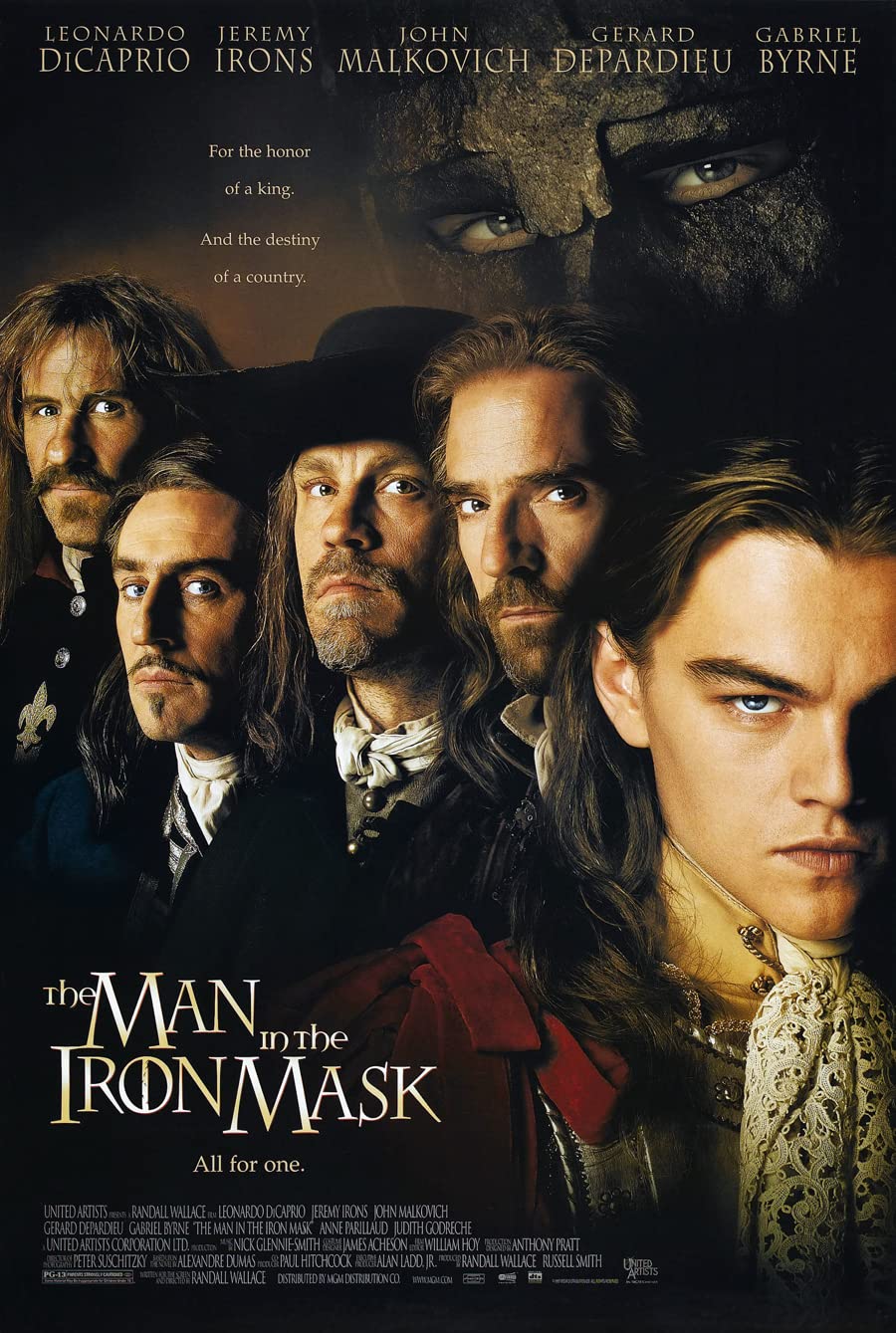
Written and directed by Randall Wallace, The Man in the Iron Mask is a lavish, swashbuckling historical epic that serves as a grand valedictory lap for Alexandre Dumas’ iconic Musketeers. Released in the immediate wake of Titanic-mania, the film leans heavily into grand Hollywood melodrama, yet it succeeds through its earnest old-fashioned showmanship, rich production design, and a powerhouse veteran cast.
The Plot
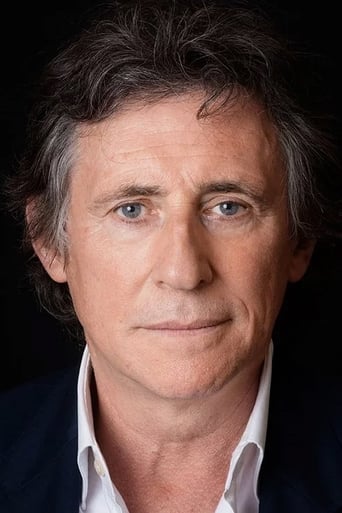
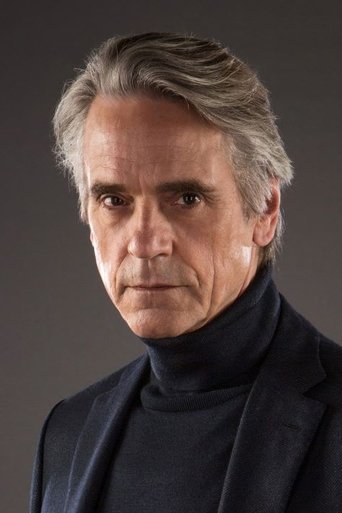
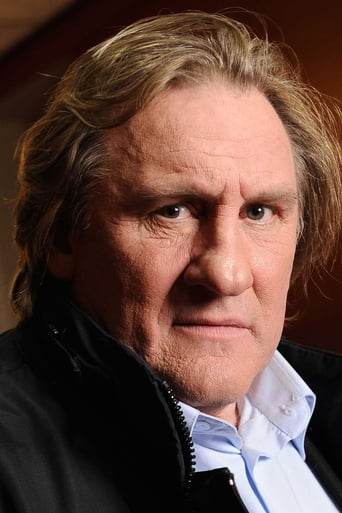
Set in 1662, France is starving under the arrogant, wasteful rule of the young King Louis XIV (Leonardo DiCaprio). While the citizens riot for food, the legendary, aging Musketeers have drifted into retirement. Aramis (Jeremy Irons) is now a priest, Porthos (Gérard Depardieu) is a fading hedonist, and Athos (John Malkovich) is a grieving father whose son, Raoul, was intentionally sent to the front lines of war to die so Louis could claim Raoul’s beautiful fiancée. Only D’Artagnan (Gabriel Byrne) remains loyal to the crown, serving as the Captain of the King’s Guard. Driven to treason by Louis’s cruelty, Aramis recruits his old friends for one final, impossible mission: break into the island fortress of the Bastille, rescue a mysterious prisoner hidden behind an iron mask, and use him to replace the King.
Themes: Loyalty, Legacy, and Brotherhood
The film is a classical exploration of honor vs. duty. It constantly forces its characters to choose between their sacred oath to the crown and their moral obligation to the people of France. It treats the bond of brotherhood as something absolute—”All for one, and one for all” is not treated as a catchy slogan, but as a tragic, binding pact that dictates their lives. Through the twin characters of Louis and Philippe, Wallace also examines the nature of power, suggesting that true leadership is born from humility and suffering rather than divine right or vanity.
Performances and Direction
Leonardo DiCaprio pulls double duty here, tackling a challenging dual role at the absolute height of his early stardom. He plays Louis with a petulant, sneering malice, and Philippe with a trembling, deeply moving vulnerability. While his youth occasionally clashes with the European period setting, his performance is fiercely committed.
The true joy of the film, however, belongs to the older generation of actors. John Malkovich delivers a raw, deeply sorrowful performance as the grieving Athos, while Jeremy Irons brings a sharp, calculated intellect to Aramis. Gérard Depardieu provides much-needed comic relief and physical heart, and Gabriel Byrne anchors the emotional stakes as the conflicted D’Artagnan, a man torn between his love for his friends and his secret devotion to the King.
Randall Wallace, who previously wrote Braveheart, directs the film with a heavy emphasis on emotional sincerity. He favors sweeping romanticism and heroic sacrifices over cynical deconstruction, giving the movie the feel of a classic Hollywood golden-era adventure.
Cinematography and Score
Peter Biziou’s cinematography is rich and operatic, capturing the decadent, candle-lit halls of Versailles with golden warmth, contrasting sharply with the damp, blue-tinted shadows of the Bastille dungeons. The grandeur is massively elevated by Nick Glennie-Smith’s soaring, majestic orchestral score, which features a triumphant main theme that remains one of the most memorable of late-90s adventure cinema.
Personal Resonance
Watching this film evokes a strong wave of cinematic nostalgia. It is an unashamedly earnest movie that relies on grand gestures and sweeping emotions. What resonated most is the heartbreaking tragedy of old friends forced to draw swords against one another due to conflicting loyalties. The climax in the stone hallways of the Bastille makes you feel the weight of their aging bodies and the immense dignity of their final charge. It leaves you with a profound respect for the enduring power of classic mythmaking.
Verdict
The Man in the Iron Mask is a wonderfully entertaining, emotionally resonant adventure epic. While it occasionally dips into historical inaccuracy and melodrama, its exceptional cast and pure romantic heart make it a timeless crowd-pleaser.
- Who should watch: Fans of classic swashbucklers like The Count of Monte Cristo, admirers of Leonardo DiCaprio’s early career, and anyone who loves a grand tale of brotherhood, secrets, and palace intrigue.
- Final thought: A beautifully old-fashioned epic that proves true nobility cannot be hidden behind iron, nor can true brotherhood be broken by a king.