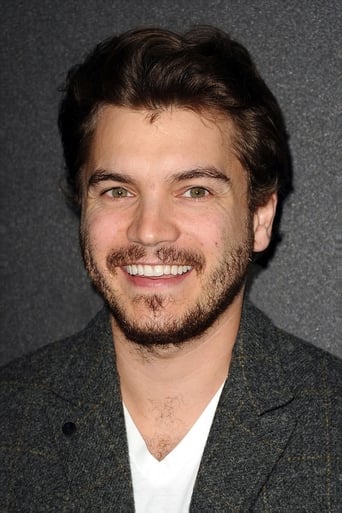
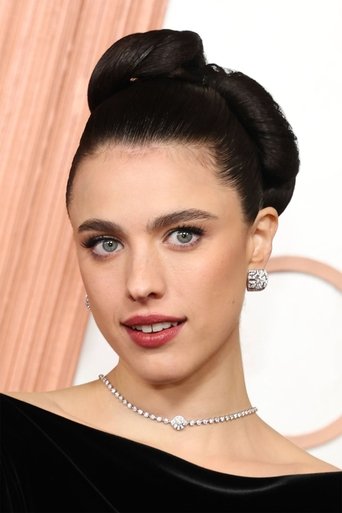
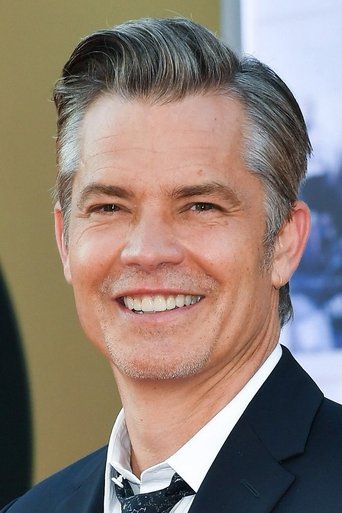
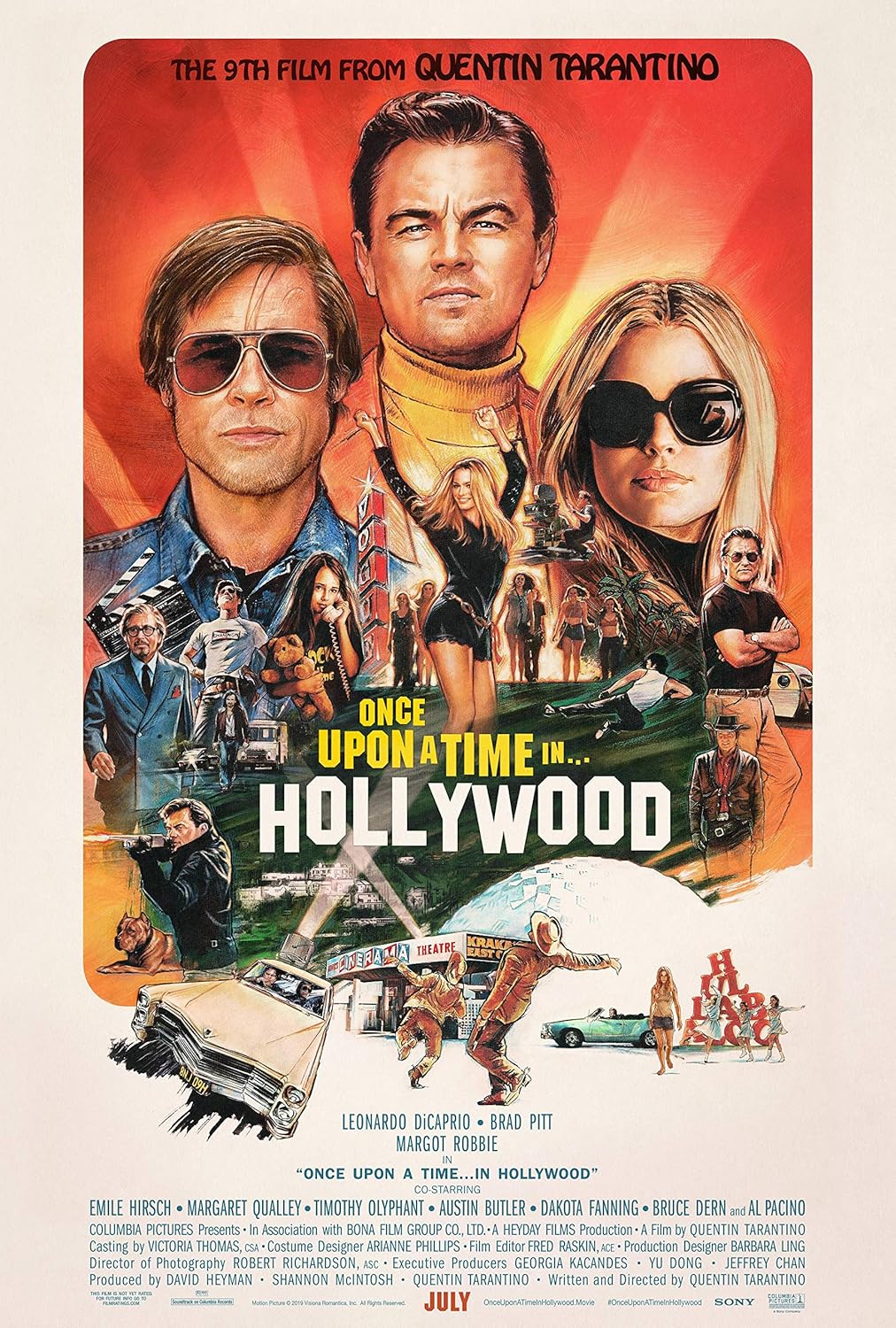
With his ninth feature film, Once Upon a Time in Hollywood, writer-director Quentin Tarantino delivers a sprawling, sun-drenched love letter to the twilight of cinema’s golden age. It is arguably his most melancholic and patient film—a fairy-tale revision of history that trades his signature rapid-fire violence for a lingering, atmospheric stroll through the hazy streets of 1969 Los Angeles.
The Plot
The narrative follows Rick Dalton (Leonardo DiCaprio), a fading television star facing the painful realization that his career is slipping away, and Cliff Booth (Brad Pitt), Rick’s loyal, easygoing stunt double, driver, and best friend. As Rick struggles to secure meaningful work in an industry that is rapidly leaving him behind, he lives right next door to the hottest new director in town, Roman Polanski, and his radiant rising-star wife, Sharon Tate (Margot Robbie). The film serves as a day-in-the-life mosaic of these three individuals as they navigate a changing cultural landscape, entirely unaware that the sinister shadow of Charles Manson and his cult followers is slowly creeping into their orbit.
Themes: The Preservation of Innocence
At its core, the film is a deeply nostalgic meditation on aging, obsolescence, and the ephemeral nature of fame. Tarantino juxtaposes Rick’s agonizing insecurity with Sharon Tate’s pure, infectious joy of living, positioning Tate as the ultimate symbol of a naive, beautiful era before the counterculture curdled into violence. By weaving fictional characters into real historical events, the movie explores the concept of cinema as a protective shield—suggesting that while the real world can be cruel and tragic, film has the unique power to grant immortality and rewrite our collective nightmares into happier endings.
Performances and Direction
Leonardo DiCaprio is phenomenal, delivering a performance that balances profound mid-life existential dread with brilliant physical comedy. His portrayal of a man stuttering through his lines on a western set, desperately fighting to retain his dignity, is deeply human.
Brad Pitt, who earned an Academy Award for the role, provides the perfect counterweight as Cliff Booth. Exhibiting an effortless, cool-guy charisma that feels pulled straight from the 1960s, Pitt steals every scene he is in with a relaxed confidence that masks a dangerous capability. Margot Robbie has minimal dialogue, but her performance is the emotional anchor of the film; she infuses Sharon Tate with a luminous, joyful innocence that makes her scenes incredibly moving.
Tarantino’s direction is uncharacteristically relaxed. He abandons his typical tightly wound crime plots in favor of a hangout movie. He lets the camera linger on car rides, neon signs turning on at dusk, and old television broadcasts, inviting the audience to simply exist in this meticulously recreated world.
Cinematography and Atmosphere
Robert Richardson’s cinematography captures the golden, smog-filtered light of Los Angeles with breathtaking warmth. The film is a sensory overload of vintage cars, billboard advertisements, and a relentless, era-defining soundtrack that bleeds seamlessly out of real car radios. The production design is flawless, transforming modern-day Hollywood into a living, breathing time capsule that feels tactile and entirely authentic.
Personal Resonance
What resonated most was the overwhelming sense of tenderness beneath the cool exterior. Knowing the horrific real-life history of the Manson family murders creates a profound sense of dramatic irony and dread throughout the film. Yet, Tarantino subverts that dread. Watching Sharon Tate walk into a movie theater just to watch herself on screen and hear the audience laugh evokes a beautiful, heartbreaking sense of joy. The film makes you feel a bittersweet longing for a time that was cut violently short, acting as an ultimate cinematic comfort blanket.
Verdict
Once Upon a Time in Hollywood is a masterfully crafted, deeply personal piece of cinema. It is a slow-burn experience that requires the viewer to sit back and enjoy the ride, culminating in one of the most audacious and satisfying finales in modern film.
- Who should watch: Lovers of cinema history, fans of character-driven hangout movies, and anyone who appreciates Tarantino’s unique brand of historical revisionism.
Final thought: A sweeping, nostalgic masterpiece that uses the magic of the movies to heal a real-world scar.