
Cast:
 Edward NortonNarrator
 Brad PittTyler Durden
 Helena Bonham CarterMarla Singer
 Meat LoafRobert Paulson
 Jared LetoAngel Face
 Zach GrenierRichard Chesler (Regional Manager)
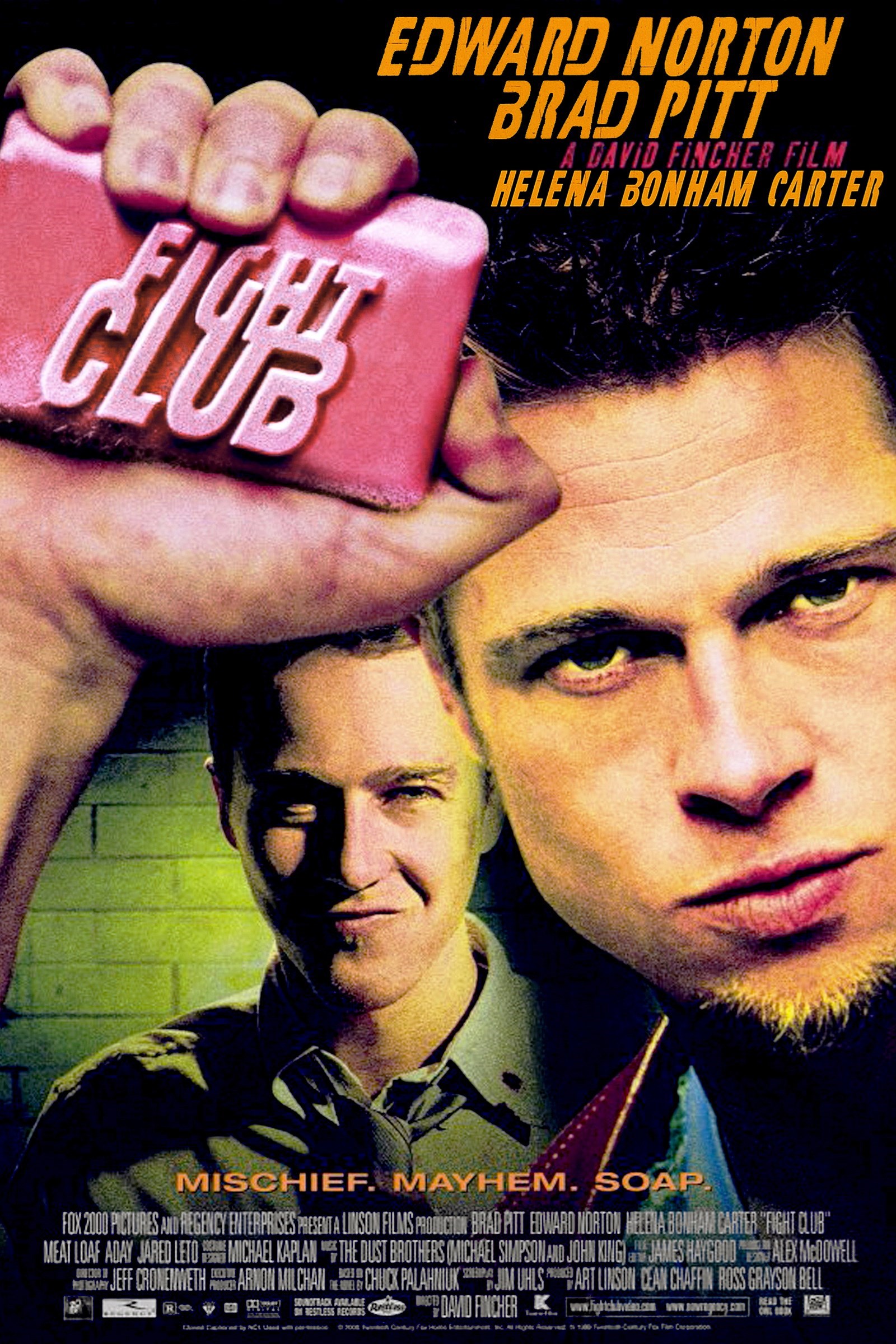
Losing All Hope Was Freedom: Fight Club Spoiler-Free Review
David Fincher took Chuck Palahniuk’s razor-sharp satire of modern consumerism and turned it into one of the defining psychological thrillers of nineties cinema.
An unnamed automobile recall coordinator drifts through a sterile corporate existence while suffering from severe insomnia. Desperate for human contact, he begins attending support groups for illnesses he does not have. Everything changes during a flight when he crosses paths with Tyler Durden, an eccentric soap maker with an explosive philosophy about modern life. When the Narrator arrives home to find his condominium blown to pieces, he moves into Tyler’s decaying house on Paper Street and agrees to a parking lot fistfight that quickly evolves into a nationwide underground movement.
Fincher’s Grimy Aesthetic and the Dust Brothers’ Pulsing Score
Director David Fincher treats every frame with surgical precision. Cinematographer Jeff Cronenweth drenches the urban wasteland in sickly fluorescent greens, sodium-vapor yellows, and deep shadow, making the Narrator’s world feel dirty and exhausting. The legendary electronic score by the Dust Brothers pumps raw adrenaline into every sequence, transforming basement brawls into hypnotic rituals. Viewers who enjoy Fincher’s grim atmosphere in Seven and the manipulative paranoia of The Game will recognize his signature command of tension here.
Fincher also fills the background with blink-and-you-miss-it single-frame flashes, visual clues, and dark comedy. The pace never lets up as Project Mayhem escalates from local mischief into a domestic threat. If you appreciate films that explore obsession and social decay like American Psycho or Joker, this script delivers relentless commentary with zero apologies.
Norton, Pitt, and Helena Bonham Carter Fire on All Cylinders
Edward Norton delivers a masterclass in quiet desperation, narrating his own downfall with deadpan cynicism. Brad Pitt brings ferocious charisma and swagger to Tyler Durden, turning a chaotic anti-hero into an irresistible force of nature. Helena Bonham Carter is unforgettable as Marla Singer, bringing genuine heart and dark humor to a role that easily could have felt abrasive.
The Verdict: A Masterpiece of Rebellion and Identity
Decades later, the satire cuts just as deep and the visual storytelling remains peerless. It stands as an absolute high watermark for the thriller and drama genres.
Score: 9 / 10 Stars
Fight Club Ending Explained
⚠️ Major spoilers ahead! ⚠️
The biggest twist of the film is that The Narrator (Edward Norton) and Tyler Durden (Brad Pitt) are the exact same person.
Tyler is not a real guy; he is a manifestation of the Narrator’s severe dissociative identity disorder (brought on by chronic insomnia and deep existential dread). Whenever the Narrator thought he was asleep, his Tyler persona took complete control of his body. It was actually the Narrator who blew up his own apartment, started the underground fight clubs, and created “Project Mayhem”—a domestic terrorist organization aimed at wiping out modern consumer debt.
In the climax, the Narrator realizes that Project Mayhem is about to detonate explosives in the basements of several major credit card companies to reset the global financial system. Tyler corners the Narrator at gunpoint in a skyscraper overlooking the city.
Realizing that the gun is actually in his own hand, the Narrator accepts the truth: to kill Tyler, he has to shoot himself. He places the barrel in his mouth and pulls the trigger. The bullet passes through his cheek, surviving the wound, but successfully obliterating the Tyler persona forever.
Marla Singer (Helena Bonham Carter) is brought into the room by Project Mayhem members just as the bombs activate. The film ends with the iconic shot of the Narrator and Marla holding hands, looking out the shattered glass window as the corporate skyscrapers collapse into dust around them, set to Pixies’ “Where Is My Mind?”.
Frequently Asked Questions About:
"Fight Club"
What is the big plot twist in Fight Club?
The Narrator and Tyler Durden are the exact same individual. Tyler is a dissociative alter ego created by the Narrator to escape the hollow consumer lifestyle and chronic insomnia that ruined his sanity.
Is Fight Club based on a novel?
Yes, David Fincher based the film on the 1996 debut novel by author Chuck Palahniuk. Screenwriter Jim Uhls adapted the book and kept most of the iconic dialogue intact.
How does the Narrator get rid of Tyler at the end of Fight Club?
The Narrator shoots himself through the mouth, blowing a hole through his cheek. The shock destroys the Tyler persona in his mind while leaving the Narrator alive to face reality.
What movies have a twist like Fight Club?
Fans of psychological identity puzzles should check out Primal Fear and Shutter Island. For another dark dive into insomnia and fractured memories, watch Memento and The Machinist.
 8.2
 6.4
 7.9
 6.5
- 6.4