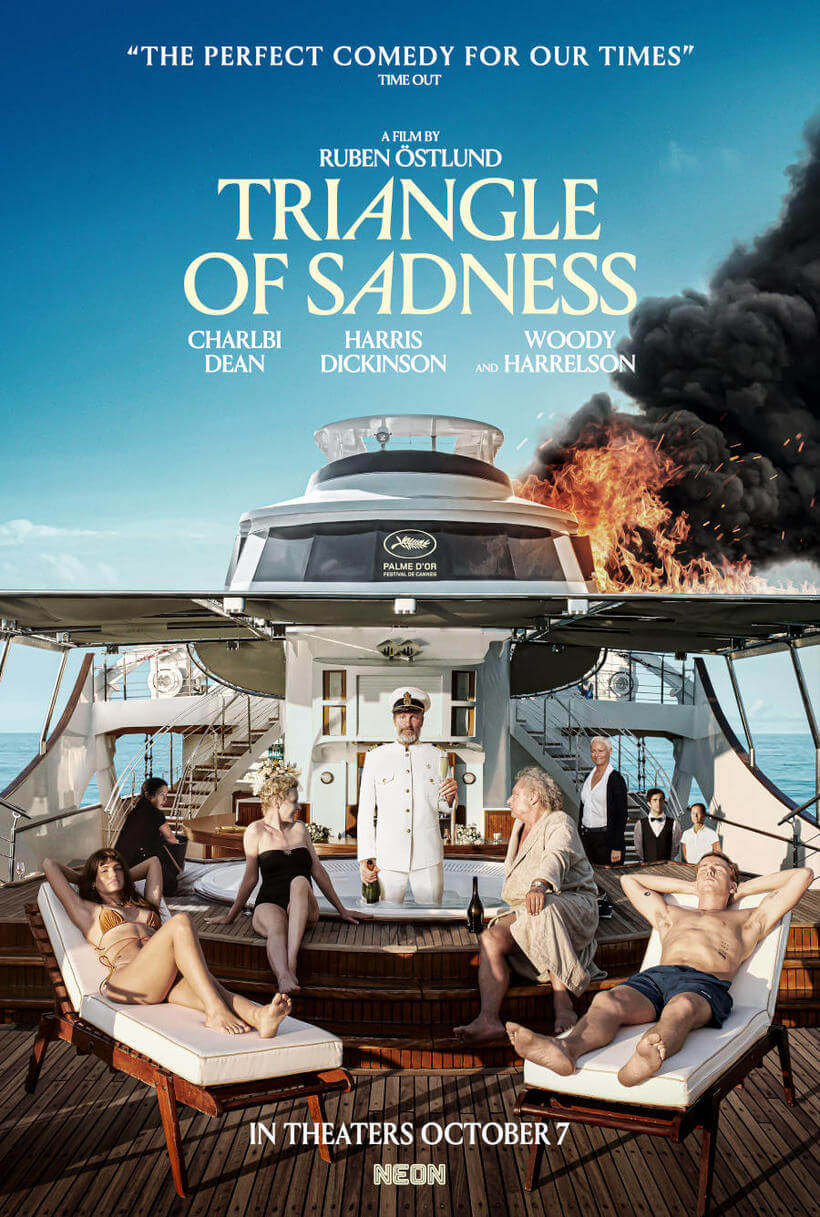
Triangle of Sadness is not your typical drama—and it definitely isn’t subtle. It’s loud, uncomfortable, clever, and sometimes downright absurd. But that’s exactly what makes it so effective. Swedish director Ruben Östlund (known for The Square) delivers a sharp-edged, satirical ride that takes aim at wealth, beauty, power, and the fragile systems that prop them up.
The film is split into three distinct acts, each with its own tone and setting, but all circling around the same themes: vanity, privilege, and the chaos that emerges when societal roles collapse. The story kicks off with a young model couple navigating the strange, transactional world of fashion and influencer culture, before shifting to a luxury yacht cruise populated by the ultra-rich. What follows is an increasingly surreal descent into chaos that’s as funny as it is unsettling.
Harris Dickinson and the late Charlbi Dean are compelling as the central couple, playing off each other with a perfect mix of charm, awkwardness, and disillusionment. Woody Harrelson, though not in the film as much as trailers might suggest, is memorable in his role as a Marxist-leaning, alcohol-loving ship captain. His scenes are both hilarious and strangely poignant.
Stylistically, Triangle of Sadness is pristine. Östlund has a real gift for long takes and uncomfortable silences, often forcing the audience to sit with the awkwardness of a moment. The humor is dry, often pitch-black, and designed to make you squirm just as much as laugh. It’s the kind of film where you’re not always sure if you’re supposed to laugh—or if you’re being judged for doing so.
What really stood out to me is how the film constantly shifts power dynamics. Just when you think you understand who holds the upper hand, the rug is pulled out from under you. It’s not just about mocking the rich—it’s about exposing how arbitrary and fragile status really is, especially when people are removed from their carefully curated environments.
That said, the film isn’t perfect. Some scenes—particularly in the third act—can feel a bit drawn out or repetitive in their messaging. But honestly, the boldness of the film’s approach outweighs any pacing flaws. It’s provocative filmmaking with purpose, and it invites conversation, discomfort, and reflection.
Final thoughts: Triangle of Sadness is a razor-sharp satire that holds up a mirror to modern society—and doesn’t flinch when it gets ugly. It’s not for viewers who want light entertainment, but for those open to bold, darkly comedic social critique, this is a must-see. It’s funny, disturbing, beautifully shot—and absolutely unforgettable.