
Star Wars: Episode V – The Empire Strikes Back

Watch Trailer
Year:
1980
Runtime:
124 Min.
Director:
Irvin Kershner
Genre:
IMDB Rating:
8.4

Cast:

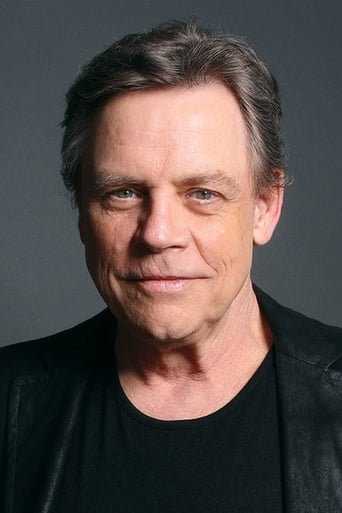
Mark HamillMark HamillLuke Skywalker
Harrison FordHarrison FordHan Solo
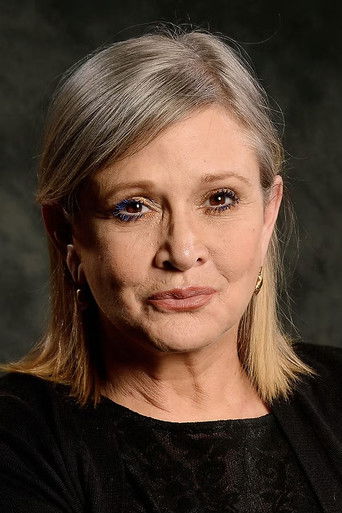
Carrie FisherCarrie FisherPrincess Leia
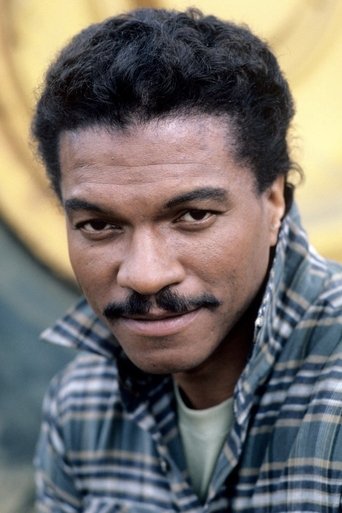
Billy Dee WilliamsBilly Dee WilliamsLando Calrissian
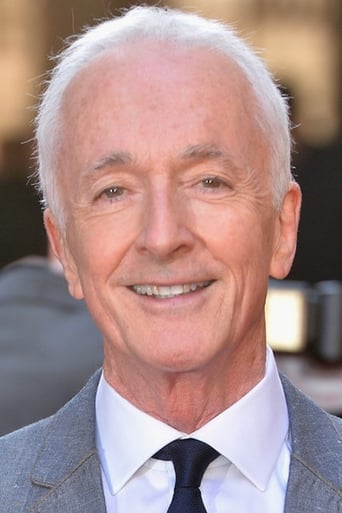
Anthony DanielsAnthony DanielsC-3PO
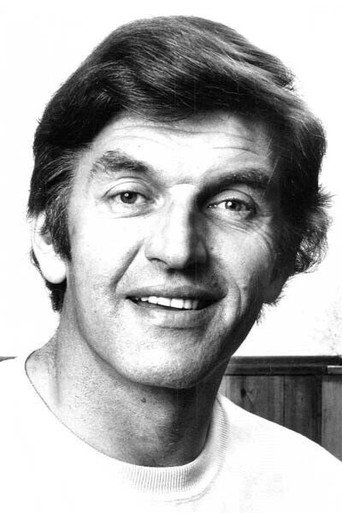
David ProwseDavid ProwseDarth Vader
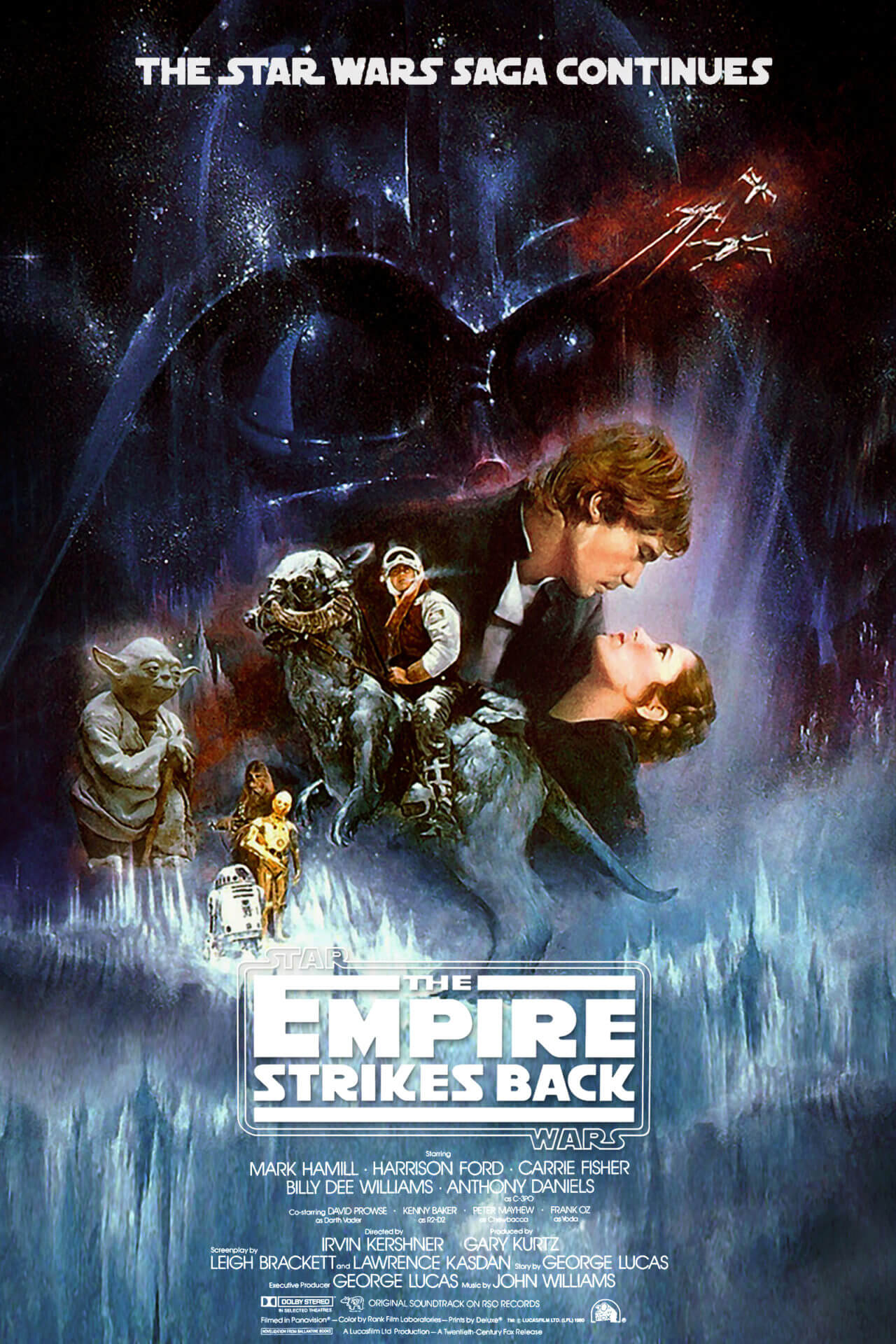
starwarsposter

The Empire Strikes Back (also known as Star Wars: Episode V – The Empire Strikes Back) is a 1980 American epic space opera film directed by Irvin Kershner. Leigh Brackett and Lawrence Kasdan wrote the screenplay, with George Lucas writing the film’s story and serving as executive producer. The second installment in the original Star Wars trilogy, it was produced by Gary Kurtz for Lucasfilm and stars Mark Hamill, Harrison Ford, Carrie Fisher, Billy Dee Williams, Anthony Daniels, David Prowse, Kenny Baker, Peter Mayhew, and Frank Oz.

The film is set three years after Star Wars. The Galactic Empire, under the leadership of the villainous Darth Vader and the mysterious Emperor, is in pursuit of Luke Skywalker and the rest of the Rebel Alliance. While Vader relentlessly pursues the small band of Luke’s friends—Han Solo, Princess Leia Organa, and others—across the galaxy, Luke studies the Force under Jedi Master Yoda. When Vader captures Luke’s friends, Luke must decide whether to complete his training and become a full Jedi Knight or to confront Vader and save them.

Following a difficult production, The Empire Strikes Back was released on May 21, 1980. It received mixed reviews from critics initially but has since grown in esteem, becoming the most critically acclaimed chapter in the Star Wars saga; it is now widely regarded as one of the greatest films of all time. The film ranked at #3 on Empires 2008 list of the 500 greatest movies of all time. It became the highest-grossing film of 1980 and, to date, has earned more than $538 million worldwide from its original run and several re-releases. When adjusted for inflation, it is the second-highest-grossing sequel of all time and the 13th-highest-grossing film in North America.[10] The film was followed by Return of the Jedi, which was released in 1983.

In 2010, the film was selected for preservation in the United States’ National Film Registry by the Library of Congress for being “culturally, historically, and aesthetically significant”.

source: wiki
Review: Star Wars: Episode V – The Empire Strikes Back (1980)

When Star Wars took over the world in 1977, it did so on a wave of operatic optimism, clear-cut morality, and swashbuckling triumph. Three years later, director Irvin Kershner and screenwriter Lawrence Kasdan shattered that safety net with The Empire Strikes Back. Widely regarded as the pinnacle of the franchise, the film achieved greatness by doing the unthinkable for a blockbuster sequel: it allowed the dark side to win.

The Plot

Following the destruction of the Death Star, the Rebel Alliance has been forced into hiding on the desolate, frozen ice world of Hoth. The relentless Darth Vader is obsessed with finding Luke Skywalker (Mark Hamill), launching a massive assault that scatters our heroes across the galaxy. While Princess Leia (Carrie Fisher), Han Solo (Harrison Ford), and Chewbacca evade the Imperial fleet in a desperate chase through space, Luke travels to the swamp planet of Dagobah. There, he seeks out a legendary, enigmatic Jedi Master named Yoda to complete his training, unaware that a trap is being laid that will culminate in a devastating truth.

Themes: Failure, Discipline, and Legacy

While the original film was a classic fairy tale, The Empire Strikes Back introduces psychological depth. It shifts the focus from external warfare to internal conflict. Yoda’s teachings redefine the Force, transforming it from a magical superpower into a deeply spiritual concept that demands mental discipline and emotional control. The film deals heavily with the burden of legacy, the temptation of anger, and the necessity of failure. As Yoda famously implies, failure is the ultimate teacher.

Performances and Direction

The cast delivers significantly more nuanced performances here than in the first outing. Harrison Ford and Carrie Fisher spark with a brilliant, screwball-comedy chemistry that grounds the romance in genuine friction. Mark Hamill carries the immense emotional weight of the film’s climax, evolving Luke from a whiny farm boy into a fractured, tragic hero.

The unsung hero of the film is Frank Oz, whose incredible puppetry and vocal performance bring Yoda to life so seamlessly that you completely forget you are watching a piece of latex.

Irvin Kershner’s direction is patient and deliberate. He focuses heavily on character dynamics, ensuring that the spectacle never overshadows the emotional stakes. He balances three parallel storylines effortlessly, building tension toward a bleak, operatic finale.

Cinematography and Visual Mastery

Cinematographer Peter Suschitzky ditches the flat, bright lighting of the original for a rich, high-contrast visual style. The film is defined by its iconic environments. The stark, blinding white of Hoth contrasts beautifully with the murky, claustrophobic greens of Dagobah, which then gives way to the pastel oranges and deep shadows of Cloud City. The final lightsaber duel—set against a stark, blue-lit carbon freezing chamber—is an absolute masterpiece of silhouette and mood.

Personal Resonance

This film evokes a profound sense of awe. It trades easy catharsis for a lingering, beautiful melancholy. What resonates most is the sheer bravery of the storytelling. The climax features one of the most famous plot twists in cinematic history, a revelation so monumental that it completely recontextualizes the entire universe. Watching Luke battered, defeated, and emotionally devastated on a catwalk at the edge of a floating city makes you feel the true threat of the Empire. It strips away the armor of the heroes and exposes their humanity.

Verdict

The Empire Strikes Back is the rare sequel that completely surpasses its predecessor. It proved that blockbuster cinema could be dark, mature, and structurally complex without losing its sense of magic.

  • Who should watch: Anyone who appreciates masterclass sci-fi, dark middle chapters like The Dark Knight, or cinematic history at its absolute best.
  • Final thought: A towering achievement that forever changed how we view cinematic mythmaking.

Star Wars: Episode V – The Empire Strikes Back Ending Explained

⚠️ Major spoilers ahead! ⚠️

The climax of the film centers on a brutal lightsaber duel in Cloud City between the young Jedi-in-training, Luke Skywalker, and the sinister Darth Vader. Vader completely dominates the fight, cornering Luke on a narrow catwalk over a bottomless reactor shaft and slicing off Luke’s right hand.

Trapped and defenseless, Luke accuses Vader of murdering his father, Anakin Skywalker, based on what Obi-Wan Kenobi had told him. Vader then drops the most famous cinematic bombshell of all time: he didn’t kill Anakin; Darth Vader is Luke’s father.

Vader tries to tempt a deeply traumatized Luke to join him, kill the Emperor, and rule the galaxy together as father and son. Refusing to turn to the dark side, Luke chooses potential death instead and lets himself fall off the catwalk into the abyss.

He survives the fall by slipping into a garbage chute, hangs onto an antenna beneath the floating city, and telepathically calls out to Princess Leia. The Millennium Falcon circles back to rescue him. The film ends on a famously somber note: Han Solo is frozen in carbonite and taken by bounty hunter Boba Fett to Jabba the Hutt, while a wounded Luke (now sporting a robotic hand) looks out a starship window into the galaxy alongside Leia, hoping for a way to save their friend.

Frequently Asked Questions About:
"Star Wars: Episode V – The Empire Strikes Back"

When the original Star Wars movie came out in 1977, it was not labeled as an episode. George Lucas added the subtitle “Episode IV: A New Hope” during its 1981 theatrical re-release to align with his expanding vision for the saga. As a result, this 1980 sequel premiered directly with the opening crawl title “Episode V: The Empire Strikes Back” to establish its place as the middle chapter.

No, this is one of the most famous examples of the Mandela Effect. The actual line spoken by Darth Vader is: “No, I am your father.” Over time, pop culture misquoted the line to include Luke’s name so that the reference would make sense when repeated out of context.

The exact timeline is never explicitly stated on screen, but it is generally understood to be anywhere from a few weeks to two months. While Han and Leia were traveling to Bespin using a backup hyperdrive—a journey that took considerable time—Luke was mastering the fundamentals of the Force under Yoda’s guidance.

Lando was forced into a corner to protect his people. Darth Vader and the Galactic Empire arrived at Cloud City ahead of the Millennium Falcon. Vader threatened to occupy the mining colony and enslave its citizens unless Lando cooperated in setting a trap to lure Luke Skywalker.

While James Earl Jones provided the iconic menacing voice, the physical suit was primarily worn by bodybuilder David Prowse. However, for the intense lightsaber duel at the end of the film, stunt double and competitive fencer Bob Anderson took over the action sequences.

Last updated: July, 2026
– Film details and cast information checked.
Leave the first comment