Review: The Butterfly Effect (2004)
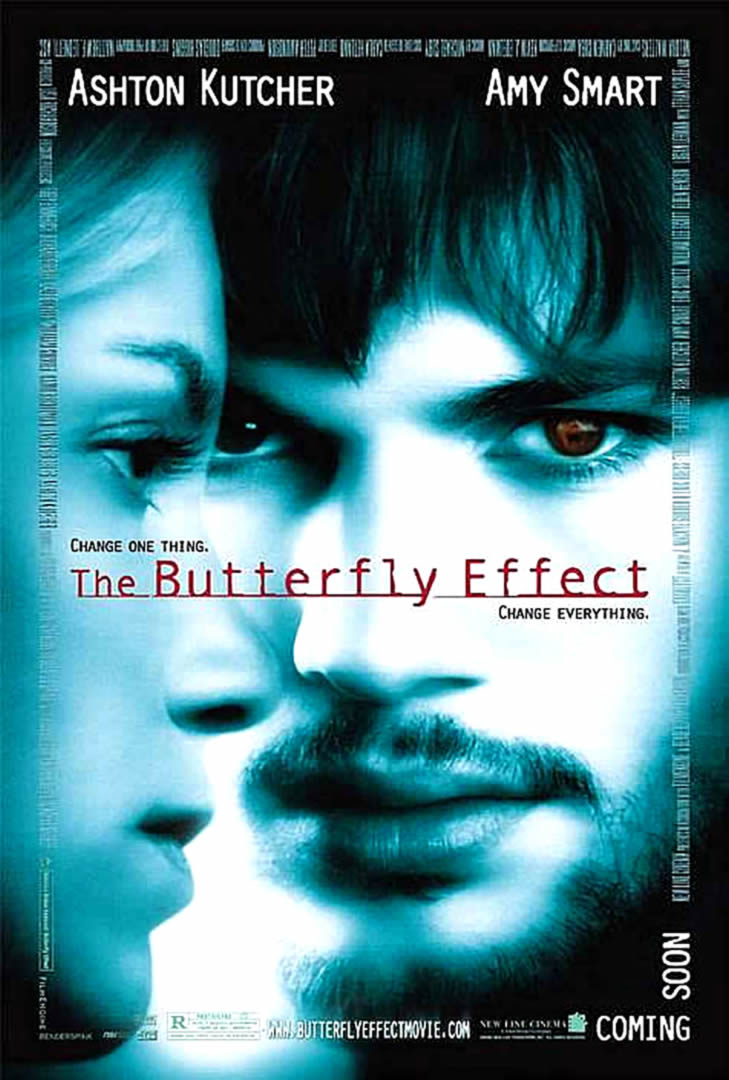
Chaos theory suggests that the flap of a butterfly’s wings can eventually cause a hurricane halfway across the world. In the 2004 psychological thriller The Butterfly Effect, directors Eric Bress and J. Mackye Gruber take this mathematical concept and warp it into a visceral, often agonizing exploration of trauma, regret, and the high cost of playing God.
The Plot
The story follows Evan Treborn (Ashton Kutcher), a young man who has suffered from mysterious blackouts during the most traumatic moments of his childhood. Years later, while reading his old journals, Evan discovers he can mentally “jump” back into his younger self during those gaps in memory. Armed with the knowledge of his adult self, he attempts to rewrite the past to save his childhood sweetheart, Kayleigh (Amy Smart), and his friends from the horrific events that scarred them. However, every time Evan alters a detail, he wakes up in a new reality where the consequences are increasingly devastating.
Themes: The Weight of “What If”
At its core, the film is a dark meditation on the impossibility of a perfect life. It deconstructs the fantasy of “fixing” the past, suggesting that suffering is often an inextricable part of the human experience. The movie leans heavily into themes of sacrifice and the destructive nature of obsession. It asks a haunting question: If you could save the person you love only by removing yourself from their life entirely, would you?
Performances and Direction
Ashton Kutcher delivers what remains one of the most surprising performances of his career. Known at the time primarily for comedy, he grounds Evan’s desperation with a frantic, wide-eyed sincerity. While the script occasionally leans into melodrama, Kutcher handles the physical and emotional shifts of his various “lives” with impressive range.
Amy Smart is the emotional anchor of the film. She is tasked with playing vastly different versions of the same woman—from a radiant college student to a broken, hollowed-out victim—and she makes each iteration feel tragic and real.
The direction by Bress and Gruber is unflinching. They don’t shy away from the “grind-house” grit of the story’s darker timelines. The film’s pacing is relentless, mimicking the racing heartbeat of a protagonist who is literally losing his mind as it tries to accommodate decades of conflicting memories in an instant.
Cinematography and Atmosphere
Matthew F. Leonetti’s cinematography effectively distinguishes the various realities through color palette and texture. The childhood sequences feel hazy and sun-bleached, yet carry an underlying sense of dread. As Evan’s life spirals, the visuals become increasingly drab, cold, and claustrophobic. The “shaking” visual effect used during Evan’s time-travel transitions successfully conveys the violent, physical toll the process takes on his brain.
Personal Resonance
Watching this film is a draining experience. It evokes a profound sense of powerlessness. What resonated most was the crushing realization that Evan’s “superpower” is actually a curse. The movie makes you feel the weight of every mistake; you feel the “cringe” of a timeline going wrong and the exhaustion of a man who keeps trying to fix a broken vase only to have it shatter into smaller pieces.
Verdict
The Butterfly Effect is not a “fun” movie. It is often bleak and features themes that are difficult to stomach. However, its bold commitment to its premise and its refusal to offer easy answers make it a standout of the early 2000s sci-fi/thriller genre.
-
Who should watch: Fans of “mind-bending” cinema like Memento or Donnie Darko, and anyone who enjoys high-stakes psychological dramas that aren’t afraid to go dark.
-
Recommendation: If possible, seek out the Director’s Cut. While the theatrical ending is poignant, the Director’s Cut offers a much more daring and tonally consistent conclusion to Evan’s journey.